Sidecar
A polished, citrus-forward classic - cognac, Cointreau and fresh lemon shaken to a frost and served in a sugar-rimmed coupe.
Ingredients
- 50 ml cognac
- 20 ml Cointreau
- 20 ml fresh lemon juice (about half a lemon)
- Caster sugar, for the rim
- 1 lemon wedge, for wetting the rim
- 1 strip of lemon peel, to garnish
- Ice cubes, for shaking
Method
- Rub the rim of a chilled coupe glass with a lemon wedge, then dip into a saucer of caster sugar to coat.
- Add 50 ml cognac, 20 ml Cointreau and 20 ml fresh lemon juice to a cocktail shaker filled with ice.
- Shake hard for 12 to 15 seconds until well chilled and frothy.
- Strain through a fine mesh strainer into the prepared coupe glass.
- Express the lemon peel over the surface to release its oils, then drop it in or rest it on the rim.
How to serve
- Glassware
- Coupe
- Serve temperature
- Cold
- Garnish
- Lemon peel and sugar rim
The Sidecar is one of the oldest sour-style cocktails still in regular rotation, and after more than a century it has not needed updating. Most accounts place its invention in Paris around the end of the First World War, supposedly named for an American officer who arrived at Harry’s New York Bar in a motorcycle sidecar. Whether or not the story holds up, the formula does: cognac, Cointreau and fresh lemon, shaken until cold and served straight up. There is nowhere for a clumsy ingredient to hide.
Why the proportions matter
Three liquids, no mixer - every millilitre counts. The modern 2:1:1 ratio (cognac, Cointreau, lemon) gives a rounder, slightly sweeter drink that suits most palates. The older equal-parts version is sharper and more austere, closer to a brandy daiquiri in style. Both are legitimate; the difference is whether you want the cognac to lead or to share the stage. If you are working with an everyday VS cognac, lean toward the 2:1:1; with a richer VSOP, equal parts lets the spirit show its complexity.
Getting the rim right
The sugar rim is a small piece of theatre that earns its place. Wet only the outer edge of the glass with a lemon wedge so the sugar sticks in a clean band and does not fall into the drink. Caster sugar gives the finest, most even coat - granulated works but feels grittier on the lip. If you want extra polish, mix the sugar with a pinch of finely grated lemon zest before dipping.
Shake the drink properly: a full 12 to 15 seconds with plenty of ice. A Sidecar that is not punishingly cold loses half its character, and the small amount of ice melt is part of the balance. Fine-strain into the chilled coupe, express the lemon peel for aroma, and drink while the glass is still misted.
Frequently asked questions
What is the classic Sidecar ratio?
The most common modern ratio is 2:1:1 - two parts cognac to one part Cointreau and one part fresh lemon juice. Older Parisian recipes use equal parts of all three, which is sharper and drier.
Do I have to use cognac?
Cognac is traditional, but a good armagnac or even a decent VS brandy works in a pinch. Avoid very young or harsh brandies - the drink relies on a smooth base to balance the citrus.
Is the sugar rim necessary?
It is optional but recommended for a classic Sidecar. The sugar softens the first sip and balances the lemon's tartness. Skip it if you prefer a drier, more austere drink.
Related recipes
French Connection
Two ingredients, one large ice cube - cognac and amaretto served over rocks for a quietly luxurious after-dinner drink.
Black Russian
A short, dark sipper of vodka and coffee liqueur over ice - bold, smooth and perfect for quiet winter evenings.
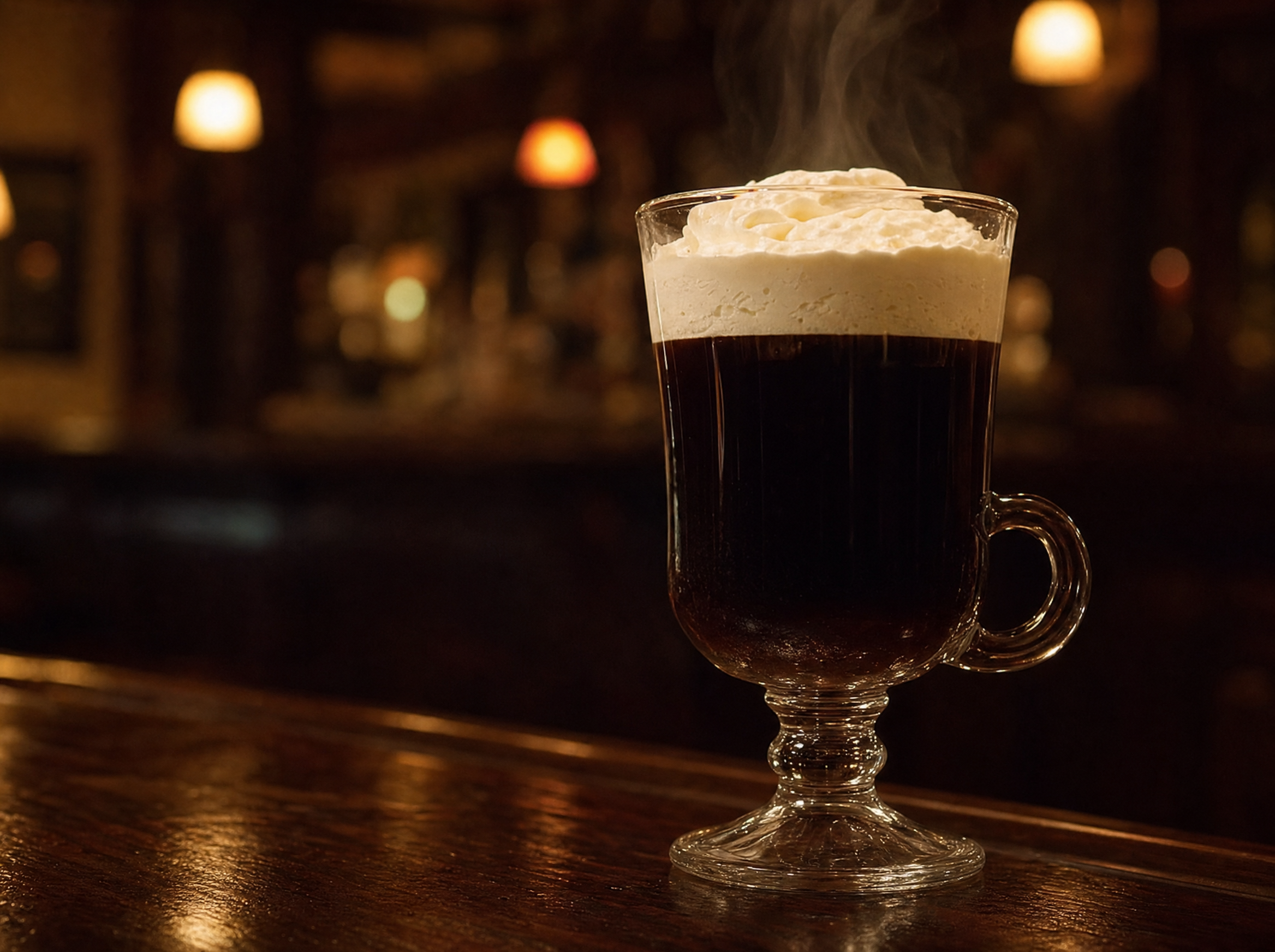
Irish Coffee
Hot coffee, Irish whiskey and brown sugar under a float of softly whipped cream - the definitive after-dinner warmer.
More like this